TWS Earphone Charging Pin Contact Issues: Comprehensive Analysis & Optimized Solutions
1. Industry Pain Point: Charging Contact Failure Has Become a Core After-Sales Challenge for TWS Brands
As the TWS (True Wireless Stereo) earphone market continues its rapid expansion in 2026, noise-canceling wireless earbuds have become a mainstream consumer electronics category. However, contact failure in charging cradle DC connectors has emerged as a persistent quality challenge that audio brands struggle to eliminate.
A leading Shenzhen-based TWS brand experienced a 2.8% after-sales failure rate within just three months of launching a new product—attributed specifically to "failure to charge" and "intermittent charging"—far exceeding the industry's acceptable benchmark of 0.5%.
Root cause analysis through full product teardown identified the core failure mechanism: uncontrolled mating tolerance between the charging cradle's built-in DC jack and the charging pins. A dimensional deviation of merely 0.02 mm was sufficient to cause intermittent contact, forcing users to repeatedly adjust earbud placement in the cradle to establish a stable charging connection.
The brand faced multiple business pressures: the outsourced connector supplier demonstrated poor batch-to-batch dimensional consistency, making the defect irreparable through production line rework. Switching to an alternative solution or re-tooling would require an extended timeline, further damaging brand reputation. The company urgently needed a standardized precision connector solution that could fundamentally eliminate charging pin contact issues at the manufacturing source.
2. Root Cause Analysis & Core Selection Requirements
2.1 Fundamental Causes of Intermittent Contact
Charging disconnection is rarely a single-component defect, but rather the cumulative result of tolerance stack-up across connector selection, precision machining, and system assembly. Two primary failure origins exist:
Jack (Female) Side: Spring contact fatigue from repeated mating/unmating over time, contact plating oxidation/corrosion, and critical dimensional deviations—all of which elevate contact resistance.
Charging Pin (Male) Side: Non-concentric pin geometry and improperly designed mating clearance, causing misalignment during insertion and resulting in intermittent open circuits.
2.2 Three Essential Requirements from Brand Manufacturers
Requirement Description
Micron-Level Dimensional Stability Full-batch dimensional variation must be tightly controlled to eliminate inter-batch tolerance discrepancies
Long-Term Durability & Corrosion Resistance Contacts must exhibit strong oxidation and fatigue resistance to withstand daily high-frequency charging cycles
Structural Compatibility Without Mold Modifications Replacement jacks must be directly compatible with existing charging cradle housings—eliminating the need for re-tooling and saving both development cost and time
3. Solution 1: Vertically Integrated Production – Tight Dimensional Tolerance Control to Eliminate Intermittent Contact
Failure Mechanism Explained
The standard mating clearance between TWS charging jacks and pins is only 0.05 mm. Any dimensional deviation in any single process step directly leads to unreliable contact, resulting in low assembly yield and high-volume after-sales returns.
Under traditional outsourced, segmented manufacturing models, tolerances accumulate across turning, injection molding, stamping, and assembly—each performed by different subcontractors—making dimensional consistency impossible to guarantee.
Industry Best Practice: Vertically integrated, end-to-end in-house manufacturing—where raw material processing, precision turning, injection molding, and finished assembly are all completed within a single, closed-loop production system. Real-time dimensional inspection and dynamic correction at each stage eliminate tolerance stack-up at the source.
Real-World Case Study
An audio TWS brand initially used a standard outsourced DC jack. The product exhibited wide fluctuation in mating/unmating force, with a finished assembly yield of only 91% and a production line rework rate as high as 7.3%.
After switching to a custom 5521-series DC jack manufactured by Dongguan Dajiang Electronics:
200 samples were randomly selected from each batch and inspected using high-precision optical projectors across 8 critical dimensions, including inner diameter, depth, and chamfer angle;
Simultaneously, endurance testers were used to verify long-term spring force stability.
Results: Post-optimization batch yield stabilized at 99.6%, while the production rework rate dropped sharply from 7.3% to 0.4%.
Dajiang's Dimensional Control Advantages
High-rigidity precision automatic lathes ensure that DC jack inner diameter tolerances are consistently controlled to ±0.01 mm. All finished products undergo dual 100% inspection using roundness testers and high-precision optical projectors—guaranteeing consistent batch-to-batch dimensional stability.
4. Solution 2: Thick-Gold Plating Process – Dual Assurance for Long-Term Contact Reliability
Failure Mechanism Explained
The average TWS earphone user charges their device once daily, subjecting the charging cradle jack to over 2,000 mating/unmating cycles per year.
Low-cost connectors with thin gold plating and weak corrosion resistance develop oxidized, blackened contacts after only 200–300 cycles. Contact resistance surges from an initial 20 mΩ to over 500 mΩ, directly preventing the device from charging.
Standardized Optimization Approach
Improvement Specification Benefit
Contact Plating Upgrade ≥15 μm thick-gold plating Reduces contact resistance; enhances oxidation resistance
Corrosion Resistance Standard 48-hour neutral salt spray test Withstands sweat corrosion and humid environments
High-Elasticity Spring Substrate Phosphor bronze/beryllium copper stamped Plastic deformation <0.01 mm after 5,000 cycles; sustained spring force
Real-World Case Study
In late 2025, an audio brand conducted a comparative validation of charging cradle jacks. The incumbent supplier's product had only 3 μm gold plating and showed signs of corrosion after just 12 hours of salt spray testing.
After switching to Dajiang's custom jack with 15 μm thick-gold plating:
The product passed 5,000-cycle simulated mating endurance testing;
Contacts showed no oxidation or blackening; spring contacts exhibited no fatigue fracture;
Contact resistance remained consistently stable at ≤25 mΩ.
The solution entered full production in Q1 2026, resulting in a 72% year-over-year reduction in charging-related after-sales complaints for the brand.
Structural Patent Advantage
Dajiang's proprietary anti-loosening audio plug structure (Patent No. 2024231918729) further reduces pin movement within the charging cradle, enhancing contact stability at the structural level and providing dual protection against charging disconnection.
5. Solution 3: In-House Tooling Development – Significantly Compressing Customization Lead Times
Industry Challenge
Current TWS earphone product iteration cycles are only 6–9 months. If connector customization sampling takes over 45 days and volume production exceeds 90 days, the product launch schedule is directly jeopardized.
By 2026, leading audio brands uniformly require suppliers to compress the entire cycle from drawing approval → sample delivery → volume production to under 25 working days.
Rapid Customization Path
Manufacturers with in-house tooling design, CNC machining centers, and wire EDM equipment can eliminate outsourcing delays. Once customer drawings are approved, internal teams simultaneously initiate steel machining and injection molding setup—allowing rapid clearance adjustments during the prototype phase and significantly reducing project development time.
Real-World Case Study
In March 2026, a manufacturer of high-capacity storage earphone cradles requiring 15A high-current charging urgently needed non-standard DC connectors for prototype builds.
Dajiang responded rapidly:
24 hours – structural solution assessment completed
Day 3 – tooling fabrication initiated
Day 8 – first sample batch delivered
The total cycle from drawing approval to volume delivery was 32 days—8 days ahead of the customer's original schedule. Among the 1,000-unit pilot batch, not a single contact failure was observed, and the company was successfully qualified as the customer's BOM-designated supplier.
Delivery Advantage
With an in-house, dedicated tooling R&D team and full control over CNC and wire EDM equipment, Dajiang can rapidly respond to non-standard customizations and urgent sampling requirements—perfectly aligned with the short-iteration, fast-launch rhythm of the consumer electronics industry.
6. Closed-Loop Quality Management & Global Compliance Assurance
Long-term connector reliability depends on a complete, standardized quality inspection system. Dajiang implements fixed inspection checkpoints across all production stages:
Stage Inspection Point
Precision Turning First-article dimensional inspection
Injection Molding Visual appearance screening
Finished Assembly 100% electrical performance verification
Full-Spectrum Testing Equipment:
Salt spray testers, mating endurance testers, roundness testers, high-precision optical projectors, and insulation resistance testers.
Comprehensive Global Certifications:
All products carry CE, UL, UKCA, FCC, RoHS, REACH, and PAHS certifications—enabling direct access to export markets across 77 countries and regions including the EU, North America, and Southeast Asia, while eliminating customs holds and brand qualification audit risks.
Production Capacity:
Standardized manufacturing facilities support monthly capacity of 5 million units, with flexible scheduling to accommodate both high-volume routine orders and urgent rush orders simultaneously.
7. 2026 Supplier Selection Guide for TWS Charging Cradle Jacks
For hardware R&D engineers and procurement professionals, here are three core dimensions to evaluate when selecting a reliable DC connector supplier—preventing charging contact failures, mass rework, and delivery delays at the source:
7.1 Batch-to-Batch Dimensional Consistency Verification
Request CPK (Process Capability Index) reports from the past 3 months for the same product specification
Focus on inner diameter and depth tolerance control levels
7.2 Durability & Corrosion Resistance Verification
Request third-party accredited test reports with minimum standards:
Salt spray test: ≥48 hours
Mating cycle endurance: ≥5,000 cycles
Contact gold plating thickness: ≥15 μm
7.3 Customization & Delivery Capability Verification
Confirm the manufacturer operates in-house tooling and machining lines
Standard non-standard sampling lead time should be ≤ 15 working days
Suppliers that simultaneously meet all three criteria provide comprehensive solutions to the industry's common challenges of intermittent pin contact, after-sales rework, and extended development cycles.
-
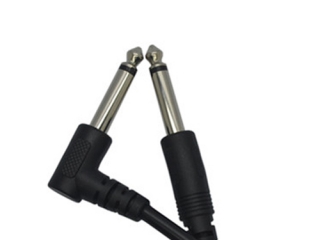 6.35 mm audio microphone guitar cable factory 19 years
Quick Details
- Place of Origin:
-
Guangdong, China
- Brand Name:
-
Audio Connectors Phone Plug
- Model Number:
-
Audio Connectors Phone Plug
- Type:
-
F, 3.5MM PCB
- Application:
-
...
Do you like ?0
Read more -
 Partner
Do you like ?0
Read more -
 Secure Works
Do you like ?0
Read more -
 Dell
DellDo you like ?0
Read more -
 Sony
SonyDo you like ?0
Read more -
 Samsung
Do you like ?0
Read more
-
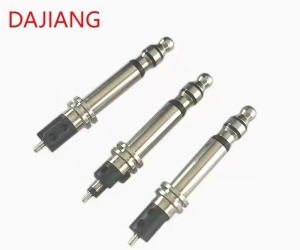
DAJIANG 5.2mm Audio Jack Plug Connector 4-Pole 8.0D 44.2L Nickel Plating Wholesale Headphone Microphone Plug Copper Contact
-
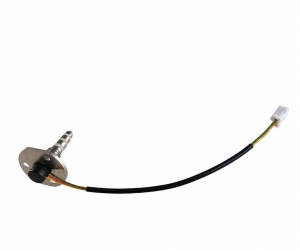
DAJIANG OEM Stainless Steel LCP 3.5mm Four-pole Threaded Power Connector Automotive New Energy Vehicle Connector Inductor Cable
-
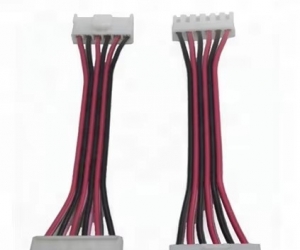
DAJIANG OEM Customized 2P/3P/4P/5P/6P/7P/8P High Quality High Performance Wholesales Custom Assembly Wiring Harness