Adapter Plug Sourcing Guidelines & Common Issue Analysis | 2026
Why Reassess Adapter Plugs in 2026? The Underestimated "Invisible Joint" of the Industry
The global consumer electronics and industrial equipment markets are poised for a new round of transformation in 2026. Driven by product iterations across new energy energy storage, smart home systems, audio-visual entertainment and other sectors, adapter plugs — a seemingly trivial category of connectors — are evolving from mere accessory components into critical "invisible joints" that determine end-product stability, safety and market access eligibility.
Paradoxically, many buyers and design engineers still adopt a simplistic mindset when sourcing these components: if it fits, it works. This widespread cognitive gap triggers recurring issues including poor electrical contact, signal interference and even safety compliance failures, inadvertently driving up corporate after-sales expenses and market entry barriers. Drawing on in-depth industrial insights for 2026, this article dissects genuine pain points and emerging trends governing adapter plug procurement, alongside actionable implementation guidelines.
I. Market Trends in 2026: The Collective Shift from Supporting Component to Mission-Critical Necessity
Surface Observation: Market Blind Spots Amid Surging Demand
Demand for adapter plugs has expanded markedly in 2026. According to the 2026 Global Connector Market Trend Report published by an industrial research institution, procurement volumes of adapter plugs within consumer electronics and industrial equipment rose by more than 18% year-on-year between 2025 and 2026. Two major catalysts fuel this growth:
First, a sharp rise in cross-device interconnection requirements. Typical use cases include conversion between different audio jack specifications (2.5 mm and 3.5 mm, mono and stereo 3.5 mm interfaces).
Second, the multi-functional evolution of end devices. Audio-video all-in-one units and smart panels integrated with DC power input and audio output functions have generated greater demand for combined power and signal conversion solutions.
Nevertheless, alongside rising demand, quality complaints and after-sales disputes involving adapter plugs have grown proportionally. Sampling test data released by a third-party quality inspection body in 2026 reveals roughly 23% of off-brand adapter plugs fail mechanical durability (insertion-withdrawal lifespan) and electrical continuity assessments. More critically, improper connector selection or mismatching of upstream components accounts for 58% of end-equipment repair cases. This exposes a pervasive oversight across supply chains: insufficient rigorous evaluation of adapter plugs despite their small form factor.
II. In-Depth Analysis: Three Core Mechanisms & Common Pitfalls in Adapter Plug Sourcing
Underlying Logic Shaping Procurement Decisions
Why do these seemingly simple adapters become frequent sources of after-sales failures? The issue can be unpacked across three dimensions.
Mechanism 1: Adaptability Pitfalls in Structural Design
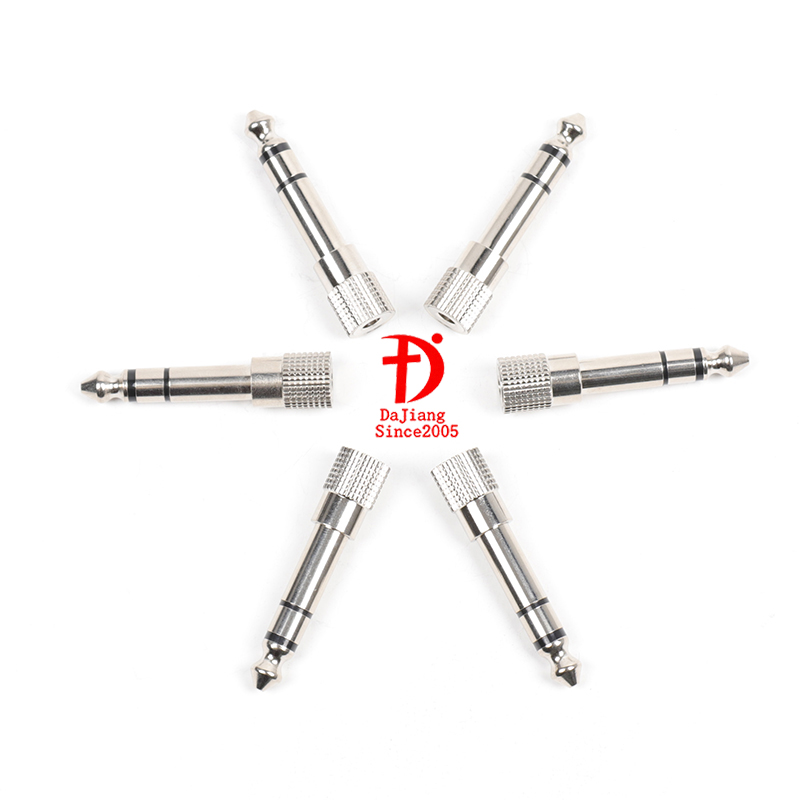
The core function of an adapter plug is to deliver mechanical and electrical conversion between disparate interface standards. Many purchasers assume any male-to-female or multi-way splitter design guarantees universal compatibility — this assumption is flawed.
Take 3.5 mm mono male-to-female audio adapters as an example. Mismatched internal pin assignments and audio channel routing can cause left-right channel crosstalk or render microphones undetectable. A deeper structural flaw plagues low-cost alternatives: the elimination of anti-loosening latches to cut expenses. In vibration-prone or frequently pulled environments such as industrial control hardware and automotive electronics, loose connectors trigger intermittent open circuits, resulting in signal dropout or equipment shutdown.
Mechanism 2: Performance Degradation Curves of Raw Materials & Surface Plating
Adapter plug performance rarely fails abruptly; instead, it deteriorates gradually over time. The rate of decline hinges entirely on base material selection and plating processes. Substandard nickel plating (thinner than 1 μm) oxidizes readily in ambient air, especially under high humidity or corrosive atmospheric conditions.
A 2026 study published in a materials science journal demonstrates that under 80% relative humidity, contact resistance of standard nickel-plated connectors triples after 1,000 mating cycles. By contrast, high-spec gold plating (15 μm contact thickness) restricts contact resistance elevation to under 20%. Equally vital is the thermal resistance of housing materials. Generic PVC or ABS casings risk thermal deformation, melting or carbonization during wave soldering or high-temperature molding, leading to catastrophic insulation breakdown.
Mechanism 3: Hardened Constraints for Environmental & Regulatory Compliance
Major global environmental regulations entered a new tightening cycle in 2026. EU RoHS, REACH, and California Proposition 65 — with stringent limits on lead and phthalates especially for children’s products and food-contact hardware — constitute non-negotiable thresholds for cross-border electronic goods.
As integral components of end devices, adapter plug material composition directly impacts customs clearance eligibility. A widely overlooked detail: baseline RoHS restricts lead below 1000 ppm, yet California Proposition 65 imposes far stricter limits for certain applications, sometimes requiring lead levels under 100 ppm. Suppliers lacking robust regulatory material control expose manufacturers to severe export compliance risks.
III. Forward-Looking Trends & Strategic Approaches: A New Paradigm for Adapter Plug Procurement in 2026
From Component-Centric Thinking to System-Centric Thinking
The preceding analysis highlights a defining shift for 2026: adapter plugs can no longer be treated as standalone conversion units. They represent fixed, critical nodes within an end device’s electrical interconnection ecosystem. Future competitiveness lies not in broad interface compatibility, but in striking precise balance among signal integrity, mechanical service life, environmental resilience and regulatory adherence.
Trend 1: Convergence of Low-Lead Environmental Standards & High-Performance Materials
The integration of low-lead eco-design and enhanced performance is becoming mainstream. While traditional environmental standards permit lead up to 1000 ppm, an increasing number of premium end brands exporting to North America and the EU — particularly audio-visual and energy storage equipment manufacturers — now demand connector suppliers cap lead content at 40 ppm.
Concurrent demand surges for high-temperature resistant materials including TPEE and LCP engineering plastics, suited for lead-free reflow soldering and sustained high-temperature operation. This mandates suppliers maintain full-process environmental control covering raw material selection, formulation and molding.
Trend 2: High Reliability and Extended Lifespan Turn Mandatory
Within Industry 4.0 and new energy storage applications, equipment design lifespans commonly exceed 10 years, imposing stringent mechanical requirements on connectors. The 5,000-cycle insertion-withdrawal durability benchmark is expanding from high-end markets into mid-tier segments. Specifications such as 48-hour salt spray resistance and long-term stable contact resistance are now standard clauses in purchase orders. This pushes manufacturers to invest heavily in plating technology and structural patent development.
Trend 3: Customization Capability Determines Market Responsiveness
Diversified end-product form factors have fuelled explosive demand for non-standard custom solutions. For instance, energy-saving equipment may require dedicated board-mounted audio jacks, while smart home panels often integrate DC power and audio output within a single conversion module.
Suppliers equipped with rapid mold development and end-to-end OEM/ODM customization capacity will emerge as core supply chain partners. Dajiang Electronics exemplifies this capability through long-term collaboration with international brands including Sony, Dell and Amphenol. In 2025, Dajiang developed custom 3.5 mm Grade 5 stainless steel audio plugs for Sony, resolving a technical bottleneck where multiple alternative suppliers halted development due to extremely low yield rates in stainless steel lathe machining. Such vertically integrated R&D and manufacturing capabilities enable agile responses to fast-evolving market requirements.
IV. Practical Implementation Framework: Four-Step Adapter Plug Sourcing Roadmap for 2026
Actionable recommendations for corporate procurement teams and design engineers
Drawing on the above analysis, we have formulated a structured decision-making framework for adapter plug procurement.
Drawing on the above analysis, we have formulated a structured decision-making framework for adapter plug procurement.
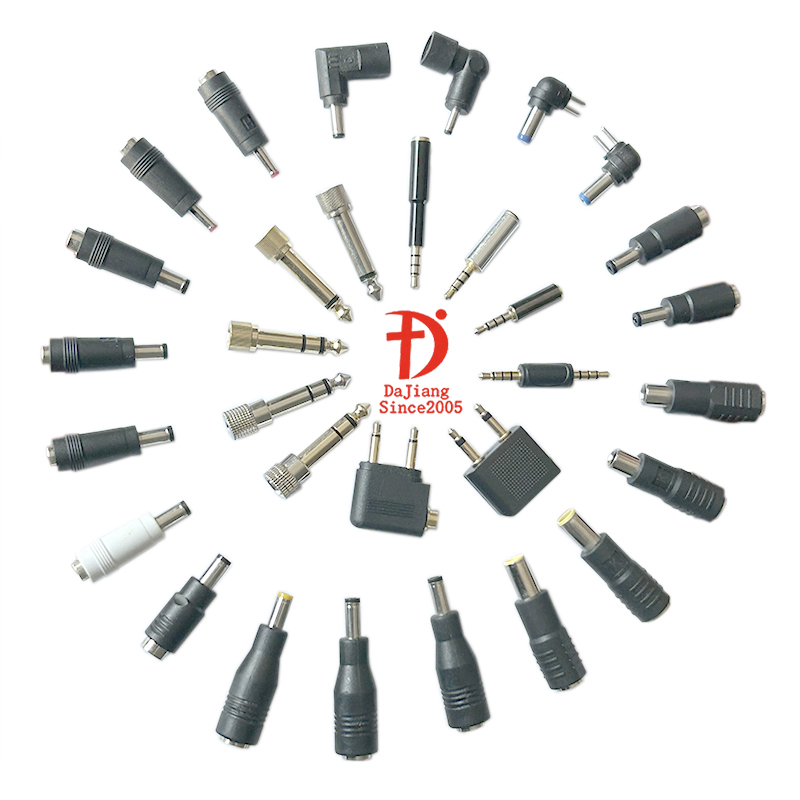
Step 1: Establish a Four-Dimensional Technical Evaluation Checklist
Prior to vendor selection, build evaluation criteria covering electrical performance, mechanical properties, environmental endurance and environmental compliance. Avoid judging products solely by appearance and dimensions. Request complete documentation from suppliers: material certificates (SGS, UL or other third-party accredited), salt spray test reports, insertion-life test records and batch consistency inspection data.
Step 2: Implement Sample Validation & Low-Volume Trial Production
Even for standard off-the-shelf products, sample testing remains mandatory. Secure 5–10 prototype units and conduct real-device validation under target operating conditions, including vibration and high-temperature/humidity environments. For customised designs, demand structural drawings and 3D printed prototypes for verification. Never proceed directly to mold production based solely on technical drawings — this practice carries substantial financial risk.
Step 3: Verify Supplier Qualifications & End-to-End Manufacturing Capacity
Prioritize suppliers with fully in-house production workflows. Heavy reliance on outsourced sub-contractors accumulates dimensional tolerances and raises quality instability risks. Confirm possession of all market-specific certifications required for export: CE, UL, UKCA, FCC, RoHS, REACH, PAHs and more.
As a local manufacturer specializing in precision connectors, Dajiang Electronics manages core processes in-house: automatic lathing, injection molding, stamping, surface treatment, assembly and testing, with a monthly output of approximately 5 million units. The firm holds ISO9001 quality management and ISO14001 environmental management system certifications alongside the aforementioned international accreditations. Partnering with such manufacturers minimizes customs delays and legal liabilities stemming from incomplete certification documentation.
Step 4: Secure Production Capacity & Supply Flexibility for Long-Term Partnerships
Treat flexible production capacity as an independent evaluation metric. Formalize terms within contracts covering lead times, contingency capacity activation protocols and defective product handling procedures. Confirm suppliers maintain raw material inventory and flexible scheduling frameworks to accommodate large client orders and ad-hoc volume increases.
V. Common Pitfalls & Industry Outlook
Warning: Reject Price-Only Procurement Logic
Cost does not equate to value in the adapter plug sector. Low-grade plating or recycled raw materials may cut component costs by a fraction of a unit currency, yet trigger percentage-point rises in end-product after-sales rates — generating far greater total losses than initial procurement savings. Enterprises are advised to adopt a total lifecycle cost evaluation model.
Industry Outlook: Coexistence of Standardization and Customization
Through 2026, the adapter plug industry will advance along dual tracks: standardization and bespoke development. Interoperability of universal interfaces will continue improving, while demand for application-specific custom connectors remains robust. Manufacturers with robust in-house R&D, independent mold development and rapid response capabilities will capture a competitive edge.
Conclusion
The adapter plug — this seemingly insignificant connector component — functions as an invisible joint shaping end-product competitiveness and reliability. The 2026 market landscape demands a sophisticated re-evaluation of procurement practices. Structural engineering, material technology, regulatory compliance and supplier competence collectively determine project success.
Only by deploying systematic assessment frameworks and cultivating trusted long-term manufacturing partners can businesses consolidate advantages amid fierce global competition and deliver sustainable, high-quality growth.
Latest posts
-
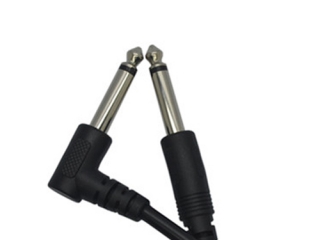 6.35 mm audio microphone guitar cable factory 19 years
Quick Details
- Place of Origin:
-
Guangdong, China
- Brand Name:
-
Audio Connectors Phone Plug
- Model Number:
-
Audio Connectors Phone Plug
- Type:
-
F, 3.5MM PCB
- Application:
-
...
Do you like ?0
Read more -
 Partner
Do you like ?0
Read more -
 Secure Works
Do you like ?0
Read more -
 Dell
DellDo you like ?0
Read more -
 Sony
SonyDo you like ?0
Read more -
 Samsung
Do you like ?0
Read more
Search
News
Hot Product
-
DAJIANG OEM Customized Curling Iron DC Power Plug Withe Two Core Power Cord Swivel End Hair Curler Connector for Beauty Salon
-
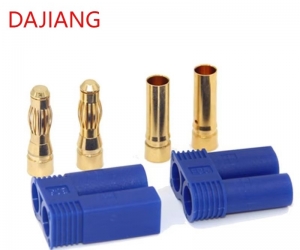
DAJIANG EC5 Bullet Banana Plug Connector Wholesale 5mm Gold Bullet Female Male Copper Contact for RC ESC Battery
-
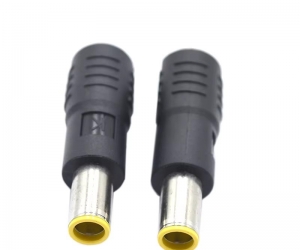
DAJIANG Copper DC Power Adapter 7.9*0.9mm Male to 8.0*2.0mm Female Converter 7909 Model for Laptop