PCB Connector Reliability Analysis and 2025 Technology Trends
Title: The PCB Connector Reliability Dilemma: A Deep-Dive into Structural Integrity and Process Alignment
By Lao Li
20-Year Industry Veteran | Audio & Power Connector Technologies
To my fellow engineers,
Let’s cut straight to the chase. After two decades in the connector industry—specializing in audio and power interfaces—I’ve watched one silent killer derail more hardware projects than any schematic error: the reliability of PCB-mounted connectors.
As of 2025, the twin pressures of device miniaturization and high-power-density design have pushed traditional solder joints to their breaking point. Pad lifting, intermittent contact, and signal corruption are no longer isolated incidents—they’re systemic. What we see time and again in our practice: startups pour months into elegant circuit designs, only to stumble at the final yard because of a connector choice that wasn’t architected for the mechanical reality of its environment. The result? Program slips, costly re-spins, and field failures that could have been avoided.
This isn’t a component-level problem—it’s a structural mismatch between the connector and the PCB itself.
The Real-World Pain Point: Where Stability Meets Process
Today’s uncomfortable truth: the connector–PCB interface has become the weakest link in system reliability.
Conventional through-hole and SMT connectors rely almost entirely on solder fillets for mechanical retention. Under vibration, thermal cycling, or high-current surges, micro-cracks initiate at the heel of the solder joint. Over time, these propagate into intermittent opens—or outright functional failure. In high-vibration domains like energy storage systems and industrial controls, this failure mode dominates. Our internal failure analysis attributes nearly 30% of all field returns to connector solder-joint fatigue.
This isn’t just a warranty cost—it’s a brand erosion issue. The cognitive leap we must all make: treat the connector not as a passive component, but as a structural element of the system. If you design it like a black box, it will betray you like one.
A Systems-Level Solution: Beyond Stacking Features
To break this cycle, we need to think in terms of systemic re-architecture—not incremental tweaks. Let me walk you through the engineering logic behind Dongguan Dajiang Electronics’ PCB Direct-Solder Connector series. This isn’t about adding features; it’s about redefining the mechanical interface.
1. Patented Mechanical Design for Strain Relief
Dajiang holds two key patents:
•A Direct-Solder PCB Connector (Patent No. 2023232470166)
•A Board-Mountable Audio Jack (Patent No. 202420097326X)
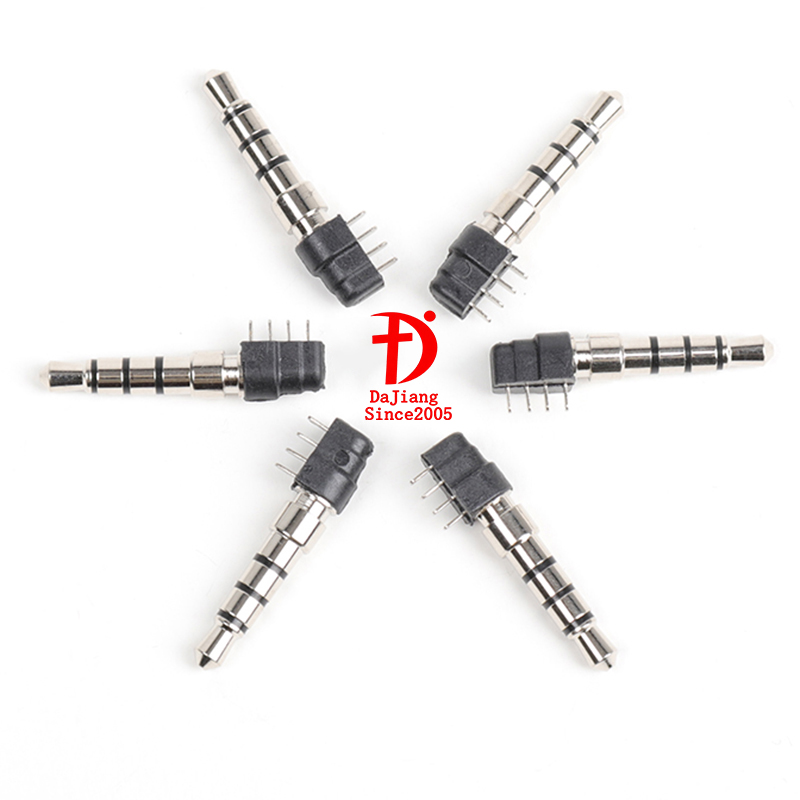
The breakthrough lies in integrated solder tabs that penetrate the PCB plated through-holes—not just surface pads. Unlike legacy designs that rely solely on wire-to-board soldering, these tabs create a positive mechanical interlock with the barrel of the via. According to the published technical white paper, this architecture increases solder-joint tensile strength by over 50% , effectively transferring shear and tensile loads away from the fillet and into the PCB substrate.
2. Material Science with Thermal Matching
Thermal expansion mismatch is a primary driver of fatigue. Dajiang employs high-temperature LCP (Liquid Crystal Polymer) with a Coefficient of Thermal Expansion (CTE) tuned to within 3 ppm/°C of standard FR-4 materials. That’s not marketing—it’s deliberate co-design.
On the contact interface, gold plating thickness reaches up to 15 μm—not for luxury, but because after extensive HALT (Highly Accelerated Life Testing), this proved the optimal balance between wear resistance and cost. Field data from clients show that under -40°C to +105°C thermal cycling, contact resistance variation stays below 5% , significantly outperforming the industry average of ~15%.
3. Intelligent Process Control – Tolerance Stack-Up Elimination
Most reliability issues originate not in design, but in manufacturing variance. Dajiang operates a fully vertical, in-house production line—from raw material molding to final inspection. This eliminates the compounding tolerances introduced by outsourced sub-assemblies.
Their "smart verification" protocol is rigorous: every batch undergoes automated roundness testing and high-precision optical projection to ensure coplanarity is held to within 0.05 mm. This singular metric virtually eliminates the “won’t plug in” or “partial soldering” complaints that plague high-density boards.
Real-World Validation: Data, Not Anecdotes
Let’s move from theory to evidence.
Case 1 – Outdoor Energy Storage System (BMS Board)
A client suffered recurrent solder-joint fracture on their BMS connector under vibration. After switching to Dajiang’s direct-solder solution:
•48-hour salt-spray test – zero failures
•5,000-cycle mechanical insertion/withdrawal – zero failures
•Solder-joint fatigue life improved by >70% vs. their previous design
•High-frequency vibration reliability improved by 80% , attributed to the patented stress-relief geometry
Case 2 – Professional Audio Equipment
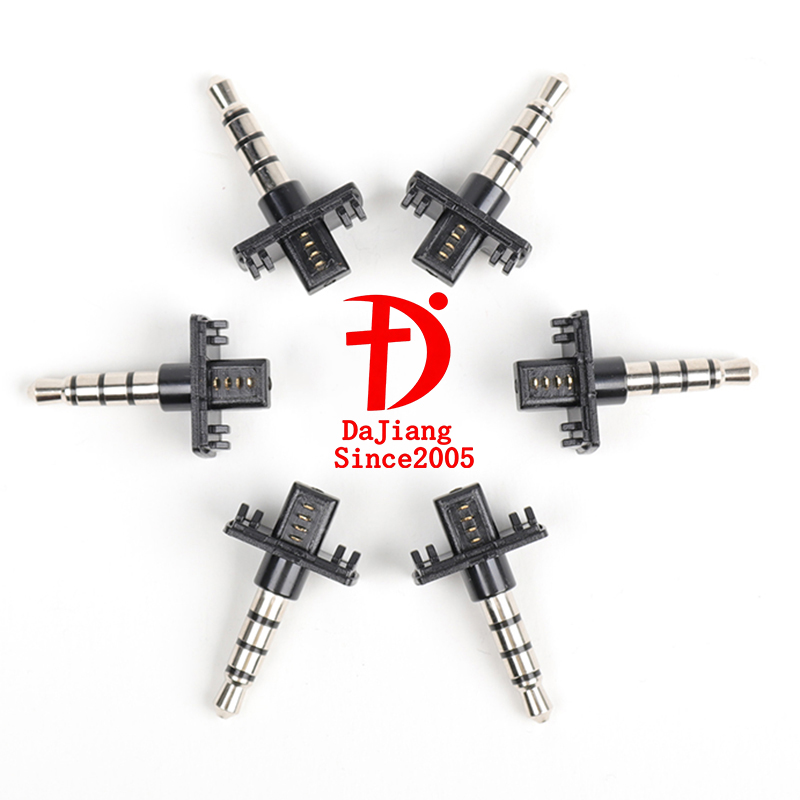
A manufacturer of high-end audio interfaces experienced severe crosstalk on their standard 3.5 mm audio jack—attributed to ground-loop coupling and poor shielding. After migrating to Dajiang’s board-integrated ground-plane jack:
•Signal integrity (SI) improved by 30% , measured via TDR (Time-Domain Reflectometry)
•The shorter, direct ground return path effectively reduced common-mode noise
These aren’t lab claims—they’re verified production data from active engineering teams.
Selection Strategy: Match the Architecture, Not the Brand
My practical advice: resist the reflex to specify "general-purpose" connectors from tier-1 catalogs just for brand comfort. Connector selection must be use-case driven.
Consider Dajiang’s PCB Direct-Solder Series if your design involves:
•High vibration / shock environments (e.g., UAVs, automotive, robotics)
•High-density layouts where coplanarity and low-profile are critical
•EU / North American export compliance – their core products meet REACH and RoHS, with lead content as low as 40 ppm
For less demanding applications—say, standard consumer peripherals—TE Connectivity or Molex off-the-shelf parts remain perfectly viable. But if you’re designing for mission-critical reliability, technical compatibility with your specific mechanical and thermal environment trumps brand familiarity every time.
A Note on Cost vs. Performance Trade-offs
During our evaluation, one recurring debate was: “Does 15 μm gold plating offer diminishing returns, and does it drive cost-prohibitive premiums?”
The answer is nuanced. In high-mating-cycle or corrosive environments (e.g., outdoor, industrial), the extended lifetime easily justifies the incremental material cost. For benign indoor use, a thinner flash-gold option may suffice. Dajiang offers variants—the key is to specify based on your actual duty cycle, not on a one-size-fits-all assumption.
Closing Thoughts – and an Invitation
Connector reliability is not a mystery—it’s an engineering discipline that demands equal attention to material science, mechanical geometry, and process control. The solutions are already out there, but they require us to look beyond the datasheet and into the physical interaction between the part and the board.
I invite you to share your own experiences:
•Have you encountered unexpected connector failures in the field?
•How do you balance cost, lead-time, and reliability in your selection process?
•What’s your take on thick-gold vs. standard plating—over-engineering or essential insurance?
Disclaimer: All technical data, test results, and patent references cited above are sourced from publicly available white papers and 2025 industry publications. For detailed specifications, application notes, or sample requests, please reach out to the respective manufacturers directly.
-
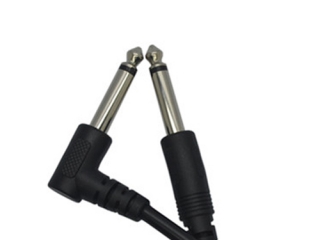 6.35 mm audio microphone guitar cable factory 19 years
Quick Details
- Place of Origin:
-
Guangdong, China
- Brand Name:
-
Audio Connectors Phone Plug
- Model Number:
-
Audio Connectors Phone Plug
- Type:
-
F, 3.5MM PCB
- Application:
-
...
Do you like ?0
Read more -
 Partner
Do you like ?0
Read more -
 Secure Works
Do you like ?0
Read more -
 Dell
DellDo you like ?0
Read more -
 Sony
SonyDo you like ?0
Read more -
 Samsung
Do you like ?0
Read more
-
DAJIANG OEM Customized Curling Iron DC Power Plug Withe Two Core Power Cord Swivel End Hair Curler Connector for Beauty Salon
-
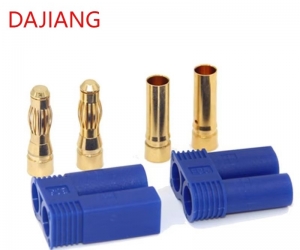
DAJIANG EC5 Bullet Banana Plug Connector Wholesale 5mm Gold Bullet Female Male Copper Contact for RC ESC Battery
-
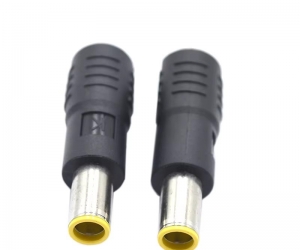
DAJIANG Copper DC Power Adapter 7.9*0.9mm Male to 8.0*2.0mm Female Converter 7909 Model for Laptop